Best Ball 101: Tips On Drafting A Winning Lineup
Pete Overzet shares his best tips and tricks for winning -- and enjoying -- best ball.
What if I told you that what I'm about to write about will become your new favorite form of fantasy football?
I don't care if you've never even heard of it until today.
That's how confident I am that best ball—which is the fastest-growing version of fantasy football—will become your new favorite hobby by the end of this piece. Unless it’s second behind Guillotine LeaguesTM, though that’s in another section of our website.
I realize I'm getting ahead of myself. I'm sorry, I get excited easily.
Let me first explain what "best ball" is, because I promise you it's not as scary as it sounds, nor is it that golf game you play at a charity tournament.
RELATED: Upload your teams to Fantasy Life's all-new Best Ball HQ
Why Play Best Ball?
There are two ways to think of best ball.
On one hand, it is the ultimate mock draft. It's a way for you to get valuable practice reps drafting in a real, competitive environment because all of the drafters have skin in the game.
On top of that, best ball is a game where you can compete for literally millions of dollars in prizes.
Does that sound too good to be true? I promise it isn't …
OK, But What Exactly Is Best Ball?
Best ball takes everything that is great about season-long leagues (drafting), removes all of the time-consuming elements (setting lineups, scouring the waiver wire, haggling for trades) and delivers prizes that rival the biggest Daily Fantasy Sports contests (tournaments at Underdog Fantasy and DraftKings feature top prizes of $1 million or more).
A best ball draft is extremely similar to what you are used to in a typical league. At Underdog—the most popular best ball platform—you draft 18 players to fill out a weekly starting lineup that consists of 1 QB, 2 RBs, 3 WRs, 1 TE, and 1 FLEX. Oh, and best of all, there are no defenses or kickers (sorry, kicker enthusiasts).
Once you draft your squad, your work is done. There are no trades or waiver adds, meaning the team you’ve drafted is the team you’ll have for the entire season. Each week the site will "set" your starting lineup with your best scores so you never have to make an excruciating decision between two boom/bust WRs. It really is a beautiful thing.
Because there is no additional work in-season, best ball aficionados can do excess amounts of drafts with no time invested outside of the time it takes to complete a draft (typically around 40 minutes for an 18-round draft).
How To Draft A Winning Best Ball Team
All that said, there are some unique strategic considerations to make when drafting a team that can't be adjusted or re-shaped throughout the season via waivers, trades, and start/sit decisions.
Drafting a best ball team is all about balancing depth and upside. Rosters need to be able to cover bye weeks—as well as potential injuries—while also working under the constraints of limited roster spots.
In an 18-round draft, drafters should select 2-3 QBs, 4-6 RBs, 7-9 WRs and 2-3 TEs. The exact number of picks devoted to a specific position should be determined by when you draft that position. The earlier you select a position (quality), the fewer players at that position you need to take (quantity).
The No. 1 thing to remember when drafting is to think quantity or quality at each position, not both.
For example, if you start your draft with three straight RBs, you should take only one or two more, at most, and those selections should be made much later in the draft. In this scenario, you want to draft as if those three premium picks at RB will carry your team at the position. You’ll now need to devote a higher quantity to WRs later in the draft because you don’t have any high-end WRs in this scenario. You can apply the same thought process to every position.
The Beauty Of Best Ball Tournaments
While there are some best ball contests that are single, self-contained 12-person leagues, the contests that generate the most interest are large-field tournaments where drafters can turn a small buy-in ($25) into millions of dollars.
Most best ball tournaments have a similar structure that make them a fun puzzle to solve from a strategy standpoint. Not only will you need a team good enough to advance from your 12-person draft in the regular season (Weeks 1-14) to the fantasy playoffs, but you’ll also need a top score in the subsequent rounds when it matters most (Weeks 15-17).
Each of these rounds functions as its own mini-tournament, as the points reset in the following round:
- Weeks 1-14 (Round 1)
- Week 15 (Round 2)
- Week 16 (Round 3)
- Week 17 (Round 4—Finals)
How To Win Millions Playing Best Ball
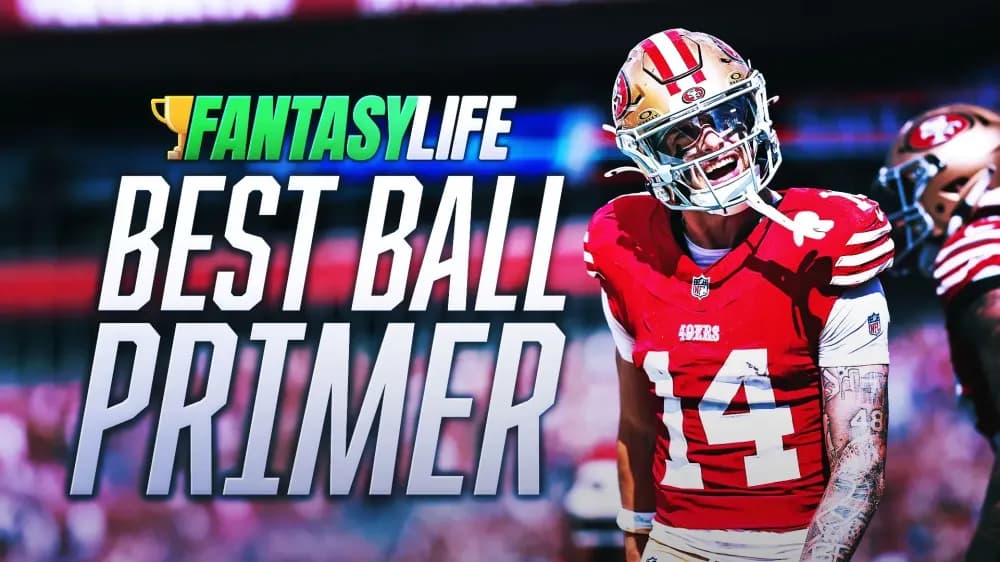
Because a majority of the prize money is distributed to the Week 17 finalists, it’s crucial that drafters prioritize players with late-season upside. Last year, Niners rookie WR Ricky Pearsall did very little for the majority of the season, but then spiked for 24.7 points in the final week. His outlier performance helped user 'LGREWE50' win first place for $1.5M in Underdog's flagship Best Ball Mania contest.
Here are two quick tips for prioritizing upside in best ball tournaments …
Target Rookies. As I mentioned with the Pearsall example, rookies are one of the skeleton keys to drafting high-upside best ball teams. Because they are a mystery box, so to speak, rookies are often discounted relative to their true upside. And, most importantly, rookies traditionally see their roles and production increase as the season moves along (think Bucky Irving and Brian Thomas Jr. in 2024). We were spoiled with an incredibly prolific rookie class in 2024 so we should keep expectations in check, but rookies need to be a big part of your draft plans.
Don't be afraid of Zero RB. The high-end RBs absolutely smashed in 2024. Saquon Barkley, Derrick Henry, Josh Jacobs, and Joe Mixon—who were all outside of the Top 12 picks—all delivered league-winning seasons after changing teams.
But, of course, now early RBs are all the rage and being pushed up draft boards. This presents an opportunity to zig while others zag and build out teams with multiple high-end pass catchers.
This strategy has been dubbed "Zero RB"—not because you literally take zero RBs, but because you punt the position until later in the draft. The reason you can get away with this is because the chaos of the RB position (and murky backfields) often results in league-winning RBs at discounted prices. Think Bucky Irving last year (late-round rookie breakout), Chuba Hubbard (late-round boring veteran in a perceived timeshare), and Jordan Mason (handcuff to CMC).
These picks won't always hit, but when they do they can supercharge your team with tournament-winning upside.
Time To Start Drafting
You now possess the playbook for drafting best ball teams that can win millions of dollars.
Be sure to review the scoring and settings for whichever best ball contest you register for. Subtle differences in scoring (PPR vs. half-point PPR) and tournament structure can impact optimal strategy.
Of course, the real benefit to drafting a few best ball teams is cutting your teeth in the ultimate fantasy training ground and preparing to crush your buddies in your season-long league.

Join Our Newsletter
Trusted by 400,000+ fantasy football players. Get access to Fantasy Life's free award winning newsletter and tools, all in one step.
By registering or logging in, you agree to our Terms of Use and Privacy Policy.