Fantasy Football 2025 League-Winning Playmakers To Target: Trey McBride, Tee Higgins, And More
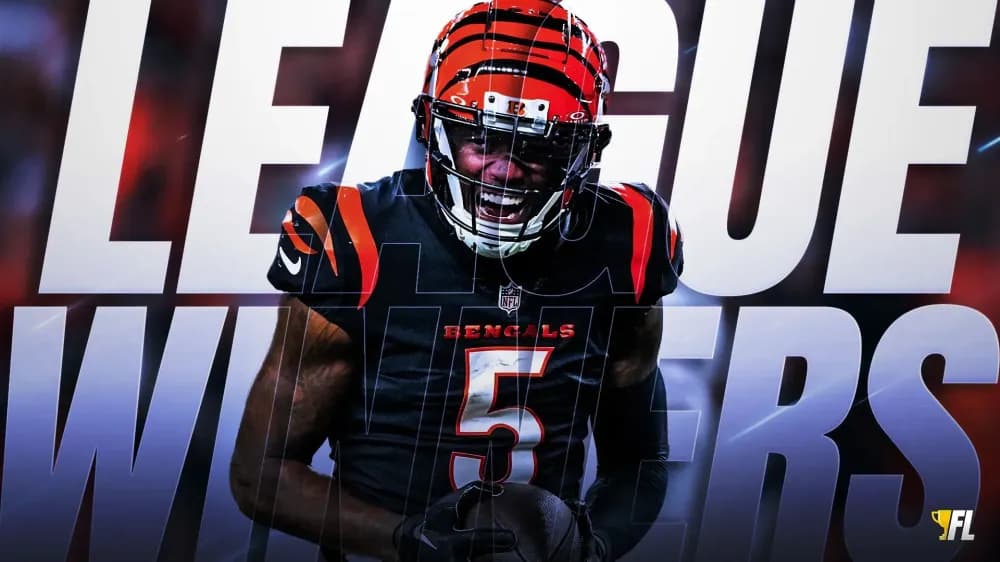
Chris Allen does a deep dive into four pass catchers who could be league-winning difference makers in fantasy football 2025.
For all of its warts, and there are many, The Dark Knight Rises had some of the best dialogue in the trilogy.
Take any sequence with Bane, for example. My favorite is his exchange with John Daggett after ousting Bruce Wayne from Wayne Enterprises. Daggett mimics the posture of a leader. Demanding answers from his (obvious) physical and intellectual superior, Daggett is the last in the room to realize his place in the hierarchy by two simple things: a hand on the shoulder and a question.
Do you feel in charge?
You should have multiple players on your fantasy roster that force your opponents to ask themselves the same question. This game is for you to have fun. Not them. And if you want your league to grimace every time your roster comes up as their next matchup, draft these four guys.

Four Playmakers To Target In Fantasy Football 2025
 Trey McBride (Consensus ADP: 27.2)
The process for drafting an early-round TE is easy. Find the ones who act like WRs. On the one hand, you’ll be sacrificing the chance to grab a high-end RB or another receiver. However, in the case of Trey McBride, he has the talent and opportunity to mitigate the risk.
McBride emphasizes my point about identifying a WR with a TE designation. The third-year pass catcher was Kyler Murray’s primary option in 2024. McBride’s 1,146 receiving yards were the first time a Cardinals receiver had crested the 1,000-yard mark since DeAndre Hopkins in 2020. But you’re not drafting just Arizona players. We need to assess his workload in comparison to other WRs. Unsurprisingly, McBride’s ability to earn looks stands out.
- Target Share: 28.1%, 4th (out of 32 qualifying WRs and TEs – min. 20.0% target share)
- Targets per Route Run: 27.5%, 5th
- Red-Zone Target Share: 31.6%, 3rd
The Cardinals’ TE averaged more targets per game (9.2) than Justin Jefferson (9.1). McBride generated more yards after the catch on a per-reception basis (4.6) than Amon-Ra St. Brown (4.4) and Malik Nabers (4.2). McBride’s only issue was TDs. Despite earning the seventh-most red-zone looks of any pass catcher (31), he found the end zone only twice through the air. Every other player with 30 or more targets from within the 20-yard line had three or more. With his situation intact and TD regression working in his favor, an early-round click on McBride will put any roster on the path toward a championship.
 Tee Higgins (Consensus ADP: 31.0)
*Record scratch*
*Freeze frame*
I’m sure you’re wondering how a WR2 like Tee Higgins wound up in an article about playmakers. He’s the guy behind the reigning Triple Crown winner. As I recall, the Broncos had the same perception.
Of course, Week 17 was one big (likely franchise-altering) game. It was Higgins’ second multi-score game and the second time he had crossed the century mark in yards. Ja’Marr Chase had five such performances by the end of the night. However, across their 13 games together, the gap in opportunity wasn’t as stark as the delta in production.
- Targets per Game: 10.4 (Chase), 9.1 (Higgins)
- Targets per Route Run: 25.2%, 24.7%
- Air Yard Share: 35.2%, 33.9%
Deployment is the differentiator between Joe Burrow’s top two targets. Higgins plays the boundary while Chase hit a career-high snap rate from the slot (33.6%). Essentially, Higgins had the harder defensive assignment. But it didn’t change how often No. 9 looked for the Clemson standout.
Higgins garnered the highest target share in obvious passing situations (34.7% to 23.8%). And, as the above clip highlights, the two were neck and neck in red-zone looks (30 to 29). While Chase “won” the race, Higgins still found his way into the paint 10 times. He’s not your typical WR2.
The Bengals’ passing pie elevates Higgins into the top-24 discussion. His rapport with one of the top QBs propels him into the Top 12, making Higgins a top WR to add in the third round.
 George Pickens (Consensus ADP: 63.6)
Admittedly, there’s no analysis to calling George Pickens a playmaker. We’ve seen him create explosives throughout his entire career.
But the problem for Pickens as a fantasy asset was his situation. Pittsburgh’s PROE has ranked in the bottom half of the league every season since joining the Steelers. His receiving aDOT has been 13 yards or more each year. Like Higgins, Pickens got the tougher assignment but with a worse passer. Luckily, his move to Dallas fixes his (on-field) issues.
In his last full season, Dak Prescott’s 12.4% deep-ball rate was 10th among starting QBs. He posted similar marks in the previous two seasons. However, his efficiency is what should drive fantasy managers to Pickens. Prescott hit top-6 metrics in passing success rate and EPA per dropback. Simply put, the path to big plays is clear. And if last season were any indication, the WR2 job in Dallas is open for new applicants.
- Jalen Tolbert: 13.6% (target share in games with Prescott)
- KaVontae Turpin: 8.8%
- Jalen Brooks: 6.3%
- Brandin Cooks: 6.0%
Prescott likes to air out the ball. Pickens has a knack for coming down with it. With Dallas poised to lean on its aerial attack in an effort to keep up with its division rivals, Pickens, in an expanded role, should be a quick click at his current draft cost.
 Rome Odunze (Consensus ADP: 84.4)
If anybody tries to rattle off any stats from Rome Odunze’s rookie season as a negative, show them this clip of his situation.
Caleb Williams ranked 23rd in completion percentage over expected. For reference, Gardner Minshew was right ahead of Williams at 22nd. Will Levis was 24th. If that’s not bad enough, think about Odunze’s time on the field this way.
Odunze was on the field for 62 of Williams’ 68 sacks. That’s 62 plays where he ran a route and no pass occurred. On another 44 plays, the Bears’ QB1 elected to scramble. In other words, Odunze ran 106 routes without the ball thrown. It adds context to any per-route stat worth considering. So, let’s consider what we do know about the former Huskie.
Odunze’s skills as a route runner went under the radar in ’24. Per NextGenStats, the rookie was one of three WRs to average more than 13 air yards per target while also averaging more than three yards of separation. Odunze’s film analysis (via Reception Perception) showed he had a 78.7% success rate against press coverage. It was the third-best mark in his class. Now, in a revamped offense, Bears’ fans are ready to crown him as the WR1.
Keenan Allen’s departure doesn’t just open up volume, but another area of the field for Odunze to roam. Allen’s 9.2 air yards per attempt (with 52.5% of his snaps coming from the slot) would’ve been a boon to Odunze at an extra four yards downfield. With his connection continuing to grow with Williams, Odunze’s collegiate profile has the chance to take center stage in 2025.

Get $25 Guillotine League Credits When You Join FL+
Lorem ipsum dolor sit amet, consectetur adipiscing elit. Nunc tinciedunt, ex sit amet cursus gravida, dui mauris vulputate felis.