Fantasy Football Trade Analyzer Advice: Buy Low on Michael Pittman Ahead of Week 11
Chris Allen breaks down Buy Lows and Buy Highs to target in the fantasy football trade market ahead of Week 11.
So, I understand Brandon Beane’s perspective.
The Bills’ GM held a press conference shortly after the trade deadline to talk about the front office’s inaction. Coincidentally, Beane took a shot at fantasy football, and his actions have long-term ramifications. There’s a cap to consider. Plus, players need time to understand the playbook. Like I said, I get his point. However, his goals aren’t that dissimilar from ours.
Even though we look at rosters in a one-year window, the idea of “it takes two to tango” is a concept that real and fantasy managers share. Even if I’m trying to acquire someone, I can’t sacrifice the remaining strengths on my roster in the process. But finding the right pieces for a negotiation can be tough. To help, let’s use some of the tools and data on hand to guide us as we head into Week 11.
Advice on Potential Fantasy Football Trade Targets For Week 11
As always, let’s start with the guys to look for in a deal. Because let’s think about trades this way. Popular or high-scoring assets will leave our squads barren. Or, more likely, you’ll get a rejection with an “lol” attached to it. On the flip side, players on other people’s benches don’t have the same potential to help our team. We’ve got to godilocks this, and there are a few you could at least start a conversation about with another manager.

Go FantasyLife+
Your league is unique. Your advice should be too. Get personalized tools, rankings, and projections tailored to your fantasy football league settings.
Buy Lows
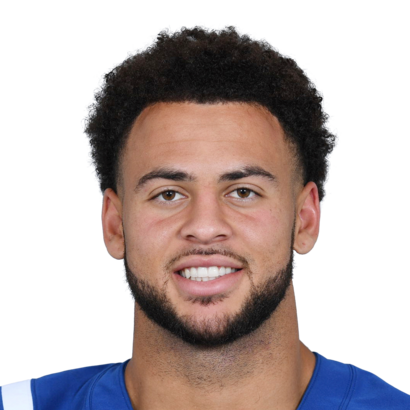
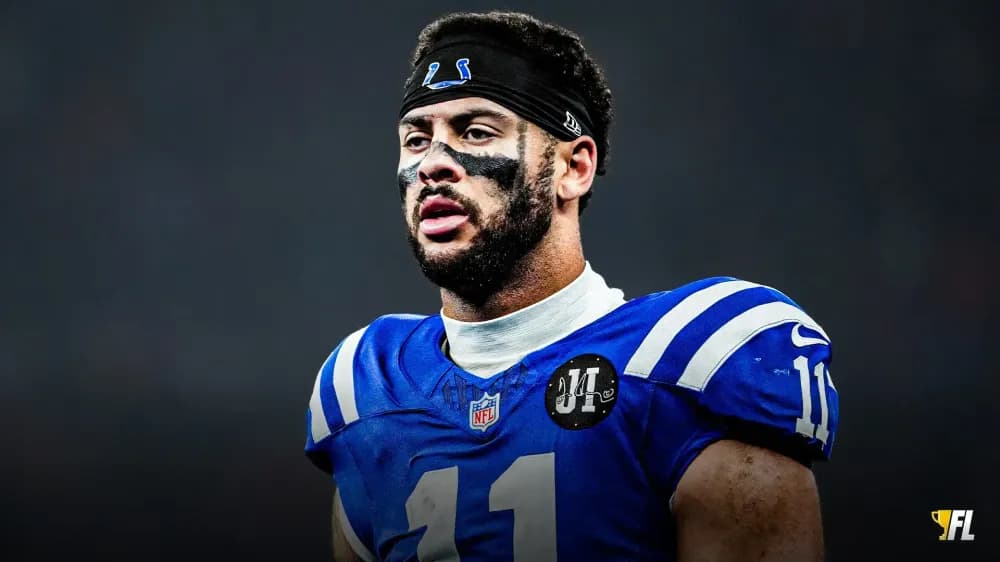
- Michael Pittman – season-low 8% target rate; Daniel Jones has either taken multiple sacks or caused two or more turnovers in three straight games.
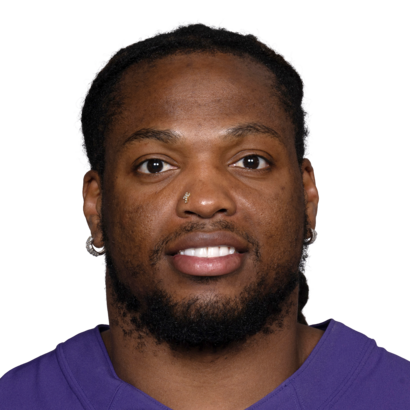
- Derrick Henry – ceding goal-line touches to Justice Hill; Henry has 17 carries from inside the 10 with only three TDs, Hill is two for two.
- Cade Otton – +20% target share in the two games since Mike Evans’ second injury; short-area aDOT (4.3 air yards) has led to 100% and 83% catchable target rate.
The intersection of Daniel Jones taking a season-high seven sacks (to go with an INT and a lost fumble) and Pittman having his worst fantasy output of the season should open the door for an offer. Indianapolis goes to Kansas City and then hosts the Texans after their bye. You could make the case that Jones will be under siege just as often, if not more than, he was in Berlin (35% pressure rate; blitzed on 41% of his dropbacks). However, Pittman should rebound after the break.
HC Shane Steichen has used play-action concepts on 40.2% of Jones’ early-down passes. Unsurprisingly, only the Lions are more successful. At the same time, Pittman not only leads the Colts with the most looks from Jones in those scenarios, but his 22.4% target rate ranks 17th among all WRs. I have concerns about Jones as a standalone QB, but Pittman’s role should bring him back to fantasy relevance in Week 12.
Buy Highs
- Jaylen Warren – 71% of the team’s carries since their Week 5 bye; also has 100% of the rush attempts from inside the five-yard line.
- TreVeyon Henderson – rushing success rate at 28.6%, but ripped off three explosive runs against the Bucs’ defense; case to be made for a 50-50 split once Rhamondre Stevenson returns.
- Jameson Williams – switch to HC Dan Campbell as playcaller coincided with Williams’ first game over 20% of the targets and an intermediate route depth.
My quick notes on Warren should be all you need to go after him. All I’ll add is Pittsburgh’s upcoming schedule.
- Cincinnati: 21.7 (PPR PPG Allowed), 32nd (Rank)
- Chicago: 11.5, 11th
- Buffalo: 21.6, 31st
- Baltimore: 12.1, 12th
The toughest opposing backfield to face Chicago over their last six games has been the Ravens and Bengals. Chase Brown (19.2 PPR points) and Derrick Henry (19.1) both finished in the top 10. With so little working in the Steelers’ offense, Warren should continue to be a focal point, making him a high-value add for any roster.
Finding the Right Fantasy Football Trade Value
Honestly, I’d say that identifying the players to put into a deal is the easy part. We can look at playoff standings and put together a short list. The harder piece comes with actually forming the offer since it requires the other manager’s input. Sure, we can start the conversation with an opening salvo. But without anything of interest, there’s a chance the trade just sits in their inbox. Here’s where our Trade Analyzer tool can help set the stage.
The model pulls our projections, Utilization data, and rest-of-season rankings together as a way to value each player. After you put in the players of interest, the resulting score grades the trade. I found a couple on the trade market worth reviewing. And even if they’re lopsided, we can make some adjustments to make them more realistic.
Trade 1
- Give: Lamar Jackson, Parker Washington
- Receive: Daniel Jones, Michael Pittman Jr., Troy Franklin
I’ve mentioned this before, but the timing of floating a deal can make all the difference. Because if you’d have attempted to move Parker Washington even a week ago, his value would have been at a low-end WR2 at best. Now, on the heels of Washington’s two-TD performance and Travis Hunter out for the season, the price for the Jaguars’ slot man couldn’t be higher. So, a return like this should work in your favor.
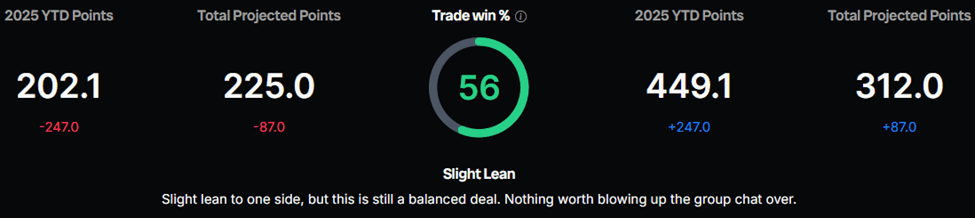
Now, the one thing we can’t capture is future opportunities when the picture changes. We’ve got a one-game sample of Washington in his new role. But it was Jakobi Meyers’ first week with the team, and the Jaguars were without Brian Thomas Jr. and Brenton Strange. How the entire passing game comes together is an unknown, which is likely lowering Washington’s ROS projection.
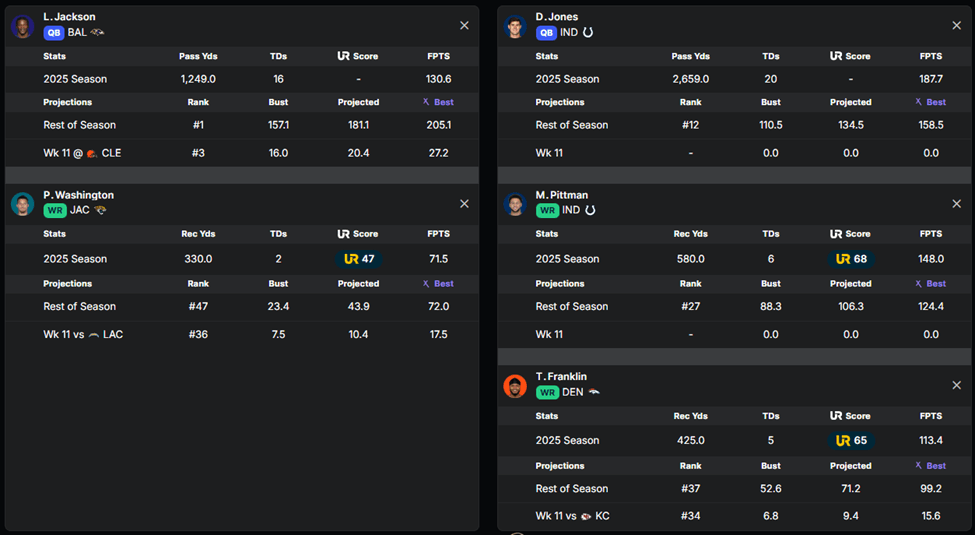
However, I said earlier, there’s some risk to Jones as your starting QB. Over the last three weeks, Jones has been under pressure at the ninth-lowest rate, but his 15 sacks lead all starters. He has the fourth-lowest EPA per dropback when the Colts’ protection unit breaks down (or he holds onto the ball too long), and Indianapolis’ schedule doesn’t get any easier. Their next three games (@ KC, vs HOU, @ JAX) will feature defenses in the top half of the league in either pressure or blitz rate. So if there are any viable backups on the wire, I’d add one to insulate your roster.
Trade 2
- Give: Jahmyr Gibbs, Darnell Mooney
- Receive: Justin Jefferson, Breece Hall
OK, I’d understand it if anyone hesitated on trading away Gibbs. He’s the RB4 in PPR PPG and just scored three TDs on Sunday. The name value alone should make him an (almost) untradeable player on your roster. But if I had to guess, the tool might say otherwise.
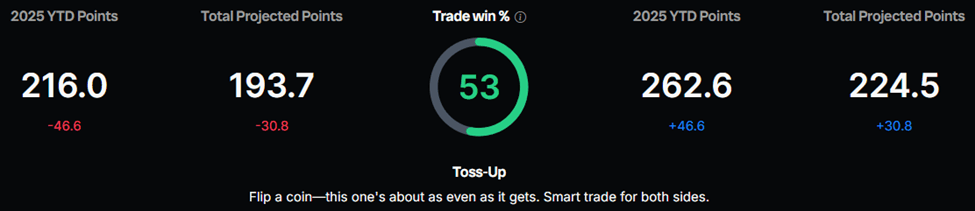
Again, timing is everything. Fantasy managers with Justin Jefferson just watched target after target go zooming over his head on Sunday. They probably miss Carson Wentz. However, contextualizing Jefferson’s usage makes him an ideal trade target.
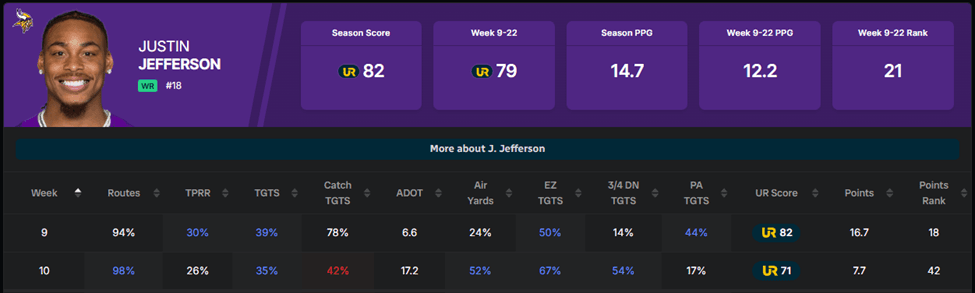
Let’s start with the target rate. Jefferson’s 12 targets led the team, and he’s been at or above 30% of the looks in all of J.J. McCarthy’s starts. The problem is the quality of the attempts. His 42% catchable target rate is a season-low mark. However, check out that aDOT number. Instead of having Jefferson run deep, HC Kevin O’Connell should be able to shift Jefferson’s routes to more high-percentage throws. Of course, it’s a gamble, but for a player like Jefferson, he’s why we send out trades.
Join Our Newsletter
Trusted by 400,000+ fantasy football players. Get access to Fantasy Life's free award winning newsletter and tools, all in one step.
By registering or logging in, you agree to our Terms of Use and Privacy Policy.