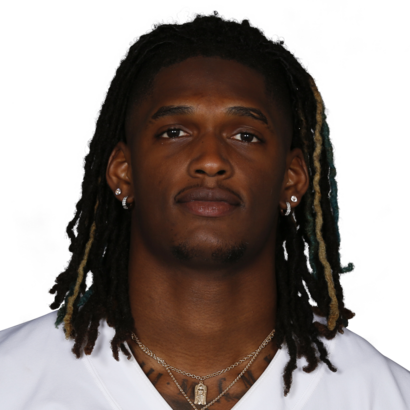
1.05 Draft Strategy For Fantasy Football 2025: Picking Between Jahmyr Gibbs And CeeDee Lamb
Chris Allen analyzes the optimal draft strategy from the 1.05 draft slot in 2025 fantasy football drafts.
OK, I’ll admit it. I’ve been the third wheel on a date before.
My story is the same as most of yours. My college roommate didn’t know the girl too well. I was friends with people who worked at the bar they chose to hit up after dinner. I made the connection, they got cheap drinks, and it was a win-win. Well, kind of.
I mean, I was there. I had fun. But I wasn’t the main character that night. So I was only half paying attention. You know. Talk up your friend, crack a joke, and then fade into the background. It’s like when Rusty tries to explain the art of conversation to Linus in Ocean’s 11. Drafting from the 1.05 is a similar experience.
You’re in constant reaction mode at the five spot. There’s no turn to leverage. The wait from 1.06 to 2.08 feels infinite. And yet, you’re supposed to act and then vanish. However, there are some aspects of the position you can leverage to your advantage.

The First Round for the 1.05
Before I get into who to consider at the 1.05, let’s think about who would be available. By ADP, I’m guessing your draft will look like this out of the gate.
Of course, there’ll be some tweaks. Barkley or Robinson might go first in half-PPR leagues, allowing Chase to fall. I wouldn’t fault anyone for taking a stand. But if that group of guys is off the table, then your decision from the five-spot becomes easier.
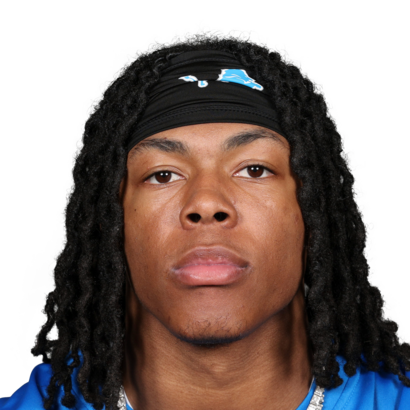
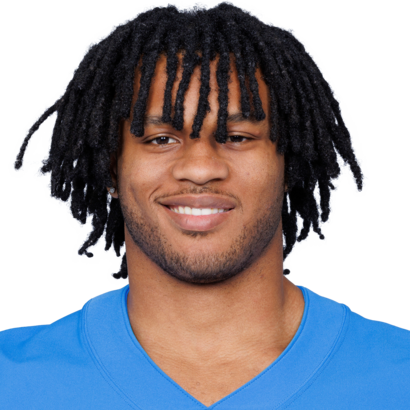
ESPN’s tweet is low-key funny. Because, on the one hand, Jahmyr Gibbs was a walking (well, running) explosive play waiting to happen. He and Derrick Henry tied for the lead amongst all RBs in ’24. But clips like these undersell what the third-year rusher is to the Lions.
The knock on Gibbs is his split time with David Montgomery. I can’t argue against it. HC Dan Campbell has stressed the importance of the duo sharing the load. So, a potential misconception is that Gibbs relies on big plays or targets. I’d push back on that idea.
- Rushing Success Rate (Weeks 1-14): 51.1%, 7th (out of 28 qualifying RBs, min. 40.0% team rushing share)
- Forced Missed Tackle Rate: 24.6%, 5th
- Adjusted Yards After Contact per Att.: 4.51, 3rd
Remember, this was when Montgomery was still healthy. And Gibbs was still averaging more yards per carry than everyone not named Barkley or Henry. All while earning 3.2 targets per game. Montgomery’s injury was like when Steve Rogers took the Super Soldier Serum for Gibbs. It amplified everything about his game, but everything was already good. More touches made him great. So, let’s make an even better team around him.
- Multiverse 1: Jahmyr Gibbs, Early QB
- Multiverse 2: Jahmyr Gibbs, Hero RB
- Multiverse 3: Jahmyr Gibbs, Late-Round QB
My first inclination would be to have Gibbs as my anchor RB and focus on other positions during the early rounds. He gets enough carries and targets to be a high-end starter every week. So, I switched up my strategies. However, my overall approach to the remaining phases of the draft should remain the same.
The Rest of the Early Rounds
Again, let’s review my loose objectives for the first six rounds.
- Grab one QB or TE.
- Build starter power at the core positions.
Since I was forcing the late-round QB strategy for Team 3, the first bullet doesn’t apply as much. However, the second bullet is critical. It’s also somewhat intuitive.

I used last year’s results as a proxy, but they highlight a couple of takeaways that bolster my position. First, even with a few duds at RB or WR, the talent dropoff is steady. Put another way, we should expect to find Saquon Barkley production at David Montgomery prices. The second point is more abstract.
Last season’s early rounds featured a total of 55 WRs and RBs (give or take, depending on site). We start at least four each week. Consequently, we should be taking as many swings at early-round receivers and rushers as possible. The likelihood of finding a star lessens each round. But for Team 1, I had to make a quick detour.

The 1.06 broke the QB seal with Josh Allen. But here’s where tiers become useful.

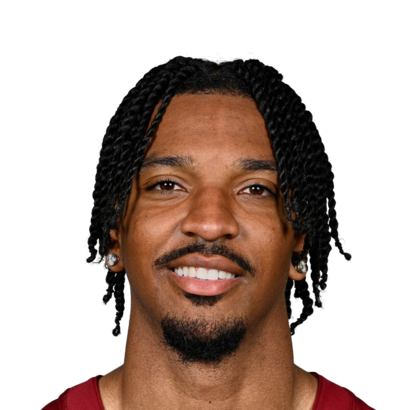
Tiers are like buckets of players. You can sort them by archetype (how they accrue points), role (WR1s vs WR2s vs WR3s), or however you like. Regardless, the result should give you clarity on the “either-or” situations that often come up in drafts. In this case, my dilemma was Jayden Daniels or a WR (i.e., Mike Evans, Tee Higgins, etc.).
For most, the answer is simple. But you might feel some pressure on the clock. So, let’s walk it out. Daniels is the last of the Tier 1 passers. Or, if you combine QB and WR, he’s the lone QB in Tier 3. Compare that to WRs. There’s a lot! Or, put another way, it’s more probable that I’ll get a Tier 3 WR in the fourth round versus a Tier 3 QB. By applying this process, the first six rounds were a breeze.

Omarion Hampton, Tetairoa McMillan, and Jaylen Waddle all sit in the same tier. Honestly, it’s the most flexible way to build rosters. Think about it this way. If you don’t like Waddle (injury history, down on Tua Tagovailoa, etc.), Zay Flowers is a reasonable compromise. You prefer James Conner to Hampton? Go ahead. The names become interchangeable because their range of outcomes is similar. The only difference is how it changes your assessment of the team as you head into the middle rounds.
Mid-Round Approach
The middle rounds are where we should be taking stock of our teams. No, I don’t mean gloating. Look at what you have and where your gaps are. For instance, let’s poke some holes in Team 3’s squad.
- No QB (that’s the late-round QB team, so no surprise there)
- Need RB2 and depth
- Need WRs to rotate in based on matchups
Understanding archetypes becomes critical in this phase of the draft. Yes, I need an RB2. But not just any running back. Javonte Williams isn’t the same as TreVeyon Henderson, who isn’t like Jaylen Warren. Their situations are different. We’re making separate short and long-term bets on each of them. But I need a mix of every RB scenario. I’ll let my picks explain.
- RJ Harvey – projects as the full-season starter; has receiving upside
- Travis Etienne – projects as the Week 1 starter with pass-catching upside; might lose work by midseason
- Zach Charbonnet – at best, splitting time; would assume RB1 workload if injury occurs
Essentially, I’ve got my starters (Gibbs and Harvey) with at least one option I can swap in during early byes (Etienne). I’d still need the later rounds to shore up the position. But since I could forecast an RB2-RB3 workload for at least the first half of the season, the need to focus on the position subsided. I used a similar process to find my QB.
Mobility is still a cheat code for QBs. But everyone knows it. It’s why Josh Allen and other QBs like him go in the early rounds. But scrambling can be just as valuable as QBs who are a designed part of the running game. Coincidentally, there’s one passer that can move that falls into the back half of the draft.
Unfortunately for Caleb Williams, the number of times we saw him on the ground behind the line of scrimmage was more than the clips of him creating first downs. But it doesn’t mean they didn’t happen. In fact, only Bo Nix and Jayden Daniels had more scrambles than Williams. However, like I said, Chicago had a litany of issues. At the same time, the surrounding negativity is something we can exploit.

I talked a bit about pressure-to-sack ratio and how it hinders QB fantasy production. But scramblers can mitigate the downside. Sure, they’ll lose a down by going down. But then they’ll make it back up, and then some, by hoofing it for a first down. And with Chicago shuffling its o-line, the potential for Williams to experience fewer pressures is reasonable. But his tendency to pick up yards on his own should remain, making him a fair bet in the middle rounds.

After 12 rounds, Team 1 has the edge. To be fair, I drafted them all. So any deficiencies are my fault. However, the “Early QB” build has the fewest holes. Once the season starts, my only concern would be how large a role Hunter Henry has in the red zone. Meanwhile, I have starters and depth at RB and WR. And, of course, an elite QB.
But roster evaluation isn’t solely about the names. It’s the workloads and types of opportunity they purport. When’s the last time you got into an argument about Jakobi Meyers? I’m guessing never. However, I bet you’d click on a guy who might get 120 targets from Geno Smith in the seventh round. Regardless, by constantly assessing your team and understanding their roles, you can construct a playoff roster with ease.

Join Our Newsletter
Trusted by 400,000+ fantasy football players. Get access to Fantasy Life's free award winning newsletter and tools, all in one step.
By registering or logging in, you agree to our Terms of Use and Privacy Policy.